ADHD in Times of Upheaval
· 14 min read
Sobriety, grief, overstimulation and the exhaustion of pretending you’re coping better than you are.
What Nobody Sees When You Go Quiet
One of the strangest parts of the last 435 days has been realising how quickly a human being can become emotionally overloaded while still continuing to function externally. I was answering emails while worrying about my mother. Who had been violently attacked in her home last year, I was trying to think about product ideas while grieving Beasty. I was researching Graves’ disease at three in the morning while simultaneously staying sober. And because I have spent most of my life appearing “high functioning,” people often assume I am coping far better than I actually am. I also had to learn how to deal with my intense feeling of hatred and revenge against my mother’s attackers. All three of them.
But to give you all some context, let me backtrack a bit: I realised recently that I had almost stopped writing altogether, which is strange because writing used to be one of the only places where my brain ever felt properly organised. Before that, it was making music. Writing songs with my rock bands, getting on stage and singing the hell out of myself. And like every good little rock singer: party like there was no tomorrow in order to self regulate, drink up the world in order to drown out the world.
For years, music was the closest thing I had to emotional regulation, although I definitely did not call it that back then. I just knew that being on stage made sense to me in a way normal life often didn’t. Loud venues, heavy music, rehearsals, gigs, smoke-filled bars, carrying equipment at stupid hours, adrenaline, exhaustion, chaos, all of it somehow felt more manageable than ordinary everyday existence.
There is something ironic about that now because technically those environments were overstimulating as hell, but they also gave all the noise in my head somewhere to go. When I was writing lyrics or performing, my intensity actually had a purpose. My brain finally had somewhere to empty itself properly. Music gave structure to emotions I could never explain in normal conversation. It made me feel less trapped inside myself.
And honestly, there was also self-destruction woven into that entire world. I think people romanticise artistic chaos far too much. Especially rock culture. The “damaged creative” stereotype sounds exciting when you are younger, but living inside it long term is another story entirely. A lot of us were not drinking because we were glamorous rock-and-roll rebels. We were overstimulated, emotionally overloaded human beings trying to regulate ourselves with whatever temporarily softened the edges.
Back then I did not fully understand the connection between ADHD, hypersensitivity, emotional intensity and addiction. I only knew that alcohol could temporarily slow things down. It quietened the static enough for me to feel normal for a little while. Or at least what I imagined normal probably felt like.
And because music environments often revolve around alcohol, late nights and emotional intensity anyway, it becomes very easy not to question any of it. Your coping mechanisms blend into the culture around you. Everybody is exhausted. Everybody is drinking. Everybody is chasing some combination of escape, adrenaline, connection and oblivion.
At some point, though, I realised I was reaching a crossroads where I had to decide whether I wanted to continue feeding the chaos or survive it. That sounds dramatic, but it is honestly the simplest way I can explain it. Sobriety changed everything. Not instantly. Not beautifully. Not in some cinematic “rebirth” kind of way. Actually, in the beginning it felt more like grief.
Because when you remove alcohol, you are not just removing a substance. You are often removing an entire version of yourself, an entire social structure, entire routines, coping mechanisms, environments, identities. Suddenly you are left standing there trying to figure out who you are without the thing that helped you tolerate both the world and yourself for so long.
I think one of the hardest parts for me was realising how intertwined creativity and self-destruction had quietly become in my own mind. Somewhere deep down I had absorbed the idea that intensity was necessary for creativity. That maybe calming down would somehow make me less creative, less interesting, less alive. A lot of artists secretly fear that.The idea that healing might flatten them. Or that stability might remove the thing that makes them special.
And for a while after getting sober, I genuinely did feel emotionally disoriented creatively. Music had always been connected to chaos for me. Suddenly I had to learn how to create without burning myself down at the same time. That is much harder than people think. Especially when your brain naturally runs hot already.
There are still moments where I miss that old version of myself, or maybe not even miss her exactly, but remember her with a strange mixture of tenderness and sadness. She was trying very hard to survive with the tools she had available at the time. But I also know I would not still be standing here if I had continued living that way indefinitely.
And perhaps that is part of why writing has become so important to me again now. Music once gave me somewhere to place the noise externally. Writing is slowly becoming that place again too, except now I am trying to do it without destroying myself in the process.
Not because I had nothing to say. The problem was actually the opposite. There was too much happening at once, (again) too much emotionally, too much mentally, too much physically, and I think at some point my brain simply stopped knowing where to begin. Every time I tried to sit down and write an update for Neurodazzled, I would either end up staring at a blank screen for an hour or writing something that sounded so artificial and polished that I would delete it immediately.
I could not bear the thought of sounding like one of those internet posts where somebody packages devastation into inspirational branding language. Because real life does not feel inspirational while it is happening. It feels exhausting, messy, confusing. Sometimes absurd and often deeply lonely.
The strange thing about adulthood is that people can be falling apart quietly while still appearing completely functional from the outside. I think I have become very skilled at that over the years. Most people who know me would probably describe me as resilient, creative, capable, maybe slightly chaotic, sometimes and asshole but generally somebody who keeps going no matter what. What they often do not see is how much energy it takes to maintain state of inner survival when internally your nervous system feels like it is permanently operating five levels above what is sustainable.
Last year changed something in me permanently, I think. My mum was severely attacked in Johannesburg. In her home. Three monsters broke in, tied her up, hit her multiple times, and stole stuff. She is 82. And still we were lucky, that she wasn’t murdered as well. Because that happens a lot during robberies.
Even now, writing that sentence still feels surreal. I wish I could explain it more elegantly, but honestly there is nothing elegant about receiving a phone call that suddenly rearranges your entire sense of safety within minutes. One moment you are worrying about completely ordinary things, deadlines, emails, money, content ideas, whether your Shopify theme is behaving properly, and the next moment none of it matters because somebody you love is hurt and far away and you realise how fragile everything actually is underneath the routines, we build around ourselves. Yet, I am a person that is always ready for the next emergency, since like forever and a day. So, I disassociated and went into crisis management mode. And did what had to be done, to ensure her future safety. But I hardly ever manage to properly exit this mode.
After that happened, I noticed something in my nervous system changed. I became hyper-alert in a way that is difficult to describe properly unless you have experienced it yourself. Every phone call suddenly felt threatening. Every unknown notification made my stomach drop. I started anticipating bad news constantly, almost as though my brain had decided the world was no longer trustworthy and it needed to remain permanently prepared for disaster.
The problem with already having ADHD and anxiety and emotional overstimulation is that when something genuinely traumatic happens, your mind does not exactly respond by becoming calmer and more rational afterwards. Mine responded by becoming louder. Much louder.
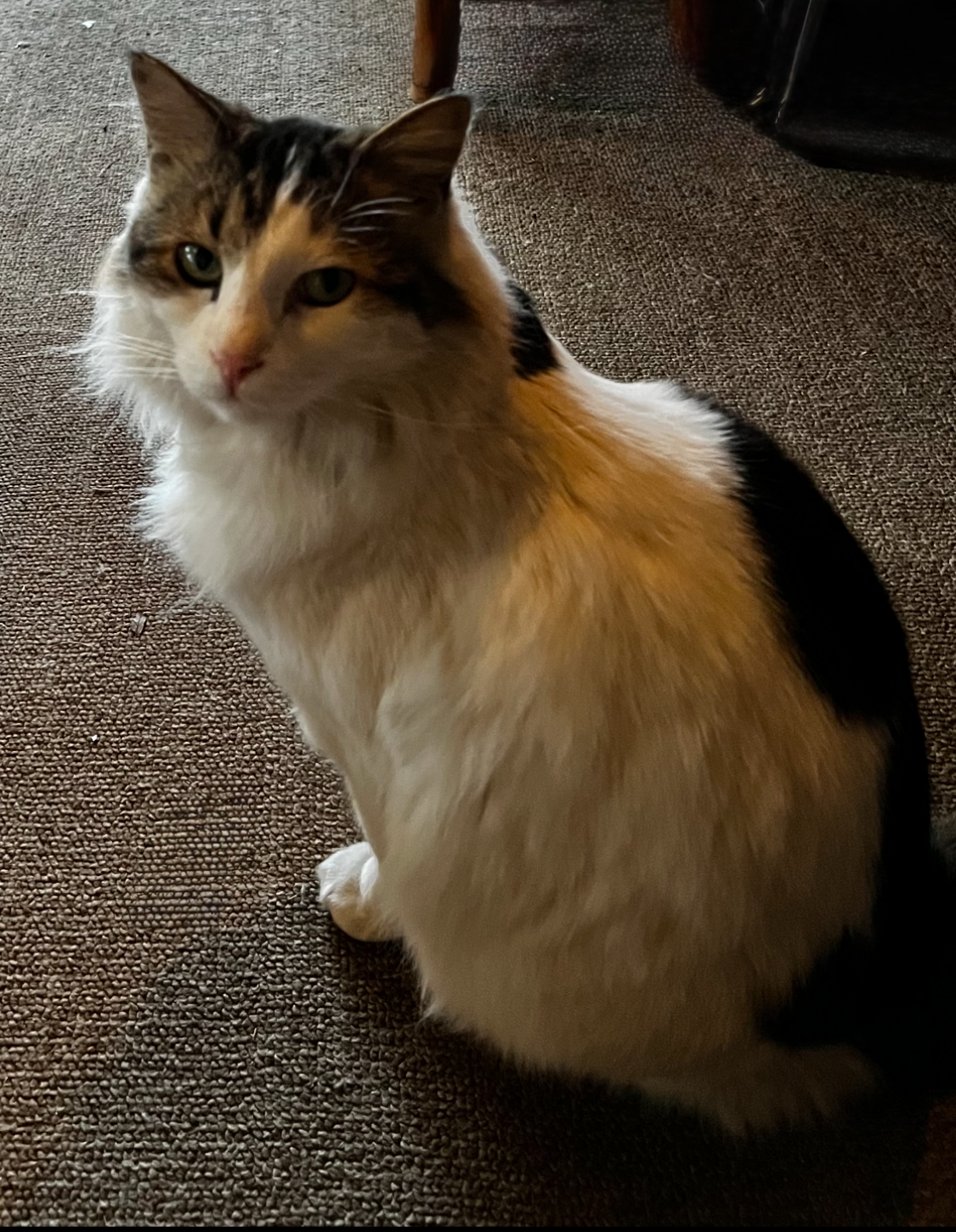
And while we were still trying to process all of that emotionally, we later suddenly lost Beasty Boy. Our family cat living in Joburg with my mom. Some of you will get the pain behind losing a pet. And the others will say it was just a cat. Well, I am also here to share: there is NEVER a ‘just’ when it comes to animals, especially when it comes to our non-human family members.
There are certain kinds of grief that people understand socially and certain kinds they do not. Losing an animal often falls into this strange category where the grief is absolutely enormous for the person experiencing it, but the world continues moving around you as though nothing significant has happened. People expect you to continue functioning normally because technically it was “just a pet,” but anyone who has truly loved an animal knows how disgusting that phrase is.
Beasty was not decorative background furniture in my life. He was part of the emotional structure of my mother’s (and my later father’s) daily existence. He was love, routine, comfort, companionship, grounding, familiarity. There is something profoundly destabilising about losing an animal whose presence has quietly woven itself into hundreds of tiny unconscious habits. I still catch myself sometimes expecting to hear him or instinctively looking for him before remembering he is gone.
Grief is strange like that. It does not behave logically. It appears unexpectedly in completely ordinary moments. And at the same time all of this was happening, I was sober. Still am, and will always be. That has probably been one of the hardest and most revealing experiences of my life, although I still struggle to talk about it openly because sobriety conversations online often feel so performative to me. Everything becomes either hyper-clinical or aggressively inspirational, and neither version really reflects my own experience.
The truth is far less glamorous. I did not stop drinking and suddenly transform into some enlightened wellness goddess who wakes up at sunrise to meditate peacefully while drinking green juice. Most of the time sobriety has felt raw.
Necessary, but raw. One of the things people rarely talk about honestly enough is that many neurodivergent people are not drinking because they are reckless or irresponsible. A lot of us drink because our nervous systems are exhausted. Because our minds do not switch off properly. Because everything feels too loud, too emotionally charged, too overstimulating, too relentless. Alcohol can become less about partying and more about temporary silence.
That is the part people often misunderstand: I am not sitting there thinking, “I desperately want another exciting drink.” Most of the time I simply want relief from my own brain for a few hours. I want the constant electrical hum in my head to soften temporarily. I want my thoughts to stop multiplying.
I wanted to feel less emotionally alert to everything around me. Humans have a certain type of smell, that I cannot stand (in large groups, on public transport, in crowded spaces). A million smells and sounds and vibrations that just implode. Yes, it’s called hypersensitivity. Sensory overload. And my previous forms of self-medicating used to make all that more tolerable. But for the past five and half years or so, I have had to learn new methods to deal with that. I have learnt how to shield myself and whenever possible, avoid situations like the above.
And when you remove alcohol, all the things underneath it are still there waiting for you. The overstimulation does not magically disappear. The anxiety does not vanish. The emotional intensity remains exactly where it was before, except now you are experiencing it without your previous coping mechanism sitting between you and reality. That can feel incredibly brutal sometimes. Especially when life itself simultaneously becomes more difficult.
Three years ago was diagnosed with Graves’ disease, which in hindsight explained a huge amount about what had been happening physically. It then disappeared for a while, but when my mom was attacked, my thyroid decided to go all Grave’s disease again. For months I had been operating with this strange combination of exhaustion and hyperactivity that I could not fully understand. My body felt permanently activated, as though somebody had increased the internal speed of my entire nervous system without asking permission first.
My heart would race constantly. I struggled to sleep properly. My anxiety levels became extreme. I felt emotionally volatile and physically depleted at the same time. And because I have spent most of my life normalising stress and overstimulation, I initially assumed I was simply failing mentally rather than recognising something physical was actually wrong too.
I think that happens to many women, especially neurodivergent women. We become so accustomed to functioning through exhaustion that we stop recognising when our bodies are genuinely struggling. Then recently my 82-year-old mum fell badly (March 13th 2026) and severely fractured her shoulder, and suddenly everything became hospitals again, doctors again, logistics again, panic again, flights again, trying to coordinate care while managing my own emotional state at the same time. In Johannesburg.
One of the least glamorous realities of adulthood is realising how much of it eventually becomes administration during crisis. You spend hours filling out forms, speaking to insurance companies, researching medical information, organising transport, managing paperwork, pretending to sound calm on phone calls while internally your mind is racing through worst-case scenarios. There is nothing cinematic about any of it. It is just exhausting. And somewhere inside all of this, I was still trying to keep Neurodazzled alive.
I think people often imagine building a brand as this exciting entrepreneurial adventure where everything feels visionary and energising all the time, but the reality is much stranger when you are building something deeply personal. Neurodazzled has never simply been a business idea to me. It came from years of trying to understand my own brain, my own emotional intensity, my own inability to fit comfortably into structures that seemed to function effortlessly for other people. My future husband Danny as well. He and I are very alike.
I have spent most of my life feeling simultaneously deeply capable and completely overwhelmed. I can generate ideas endlessly but organising them becomes another matter entirely. I can become hyper-focused for twelve hours straight on something creative and then completely forget to answer important emails or clean my flat
I can care too much about everything and then suddenly burn out so hard that even simple tasks feel impossible. And then I turn ice cold. For years I internalised that as personal failure. Laziness. Disorganisation. Lack of discipline. But over time, especially recently, I have started understanding that many of these patterns are connected to living inside a nervous system that experiences the world differently.
And honestly, I think that is why the direction of Neurodazzled suddenly became clearer during this difficult period. Because I became tired of pretending. Tired of polished branding language. Tired of fake positivity. Tired of internet content that sounds emotionally profound while actually saying nothing real.
I do not want to create another glossy “wellness” brand built around pretending everybody can optimise themselves into emotional peace with enough morning routines and productivity hacks. That is not my experience of life. And I suspect it is not the experience of many other neurodivergent people either. What interests me now are the conversations people often avoid because they are uncomfortable: The relationship between ADHD and addiction.
The way overstimulation can make people desperate for relief. The shame many intelligent adults carry privately. The exhaustion of masking functionality while internally collapsing. The strange grief that can accompany late diagnosis, when you suddenly begin reinterpreting your entire past through a completely different lens. The reality that sobriety is sometimes less about becoming “healthy” and more about learning how to survive your own mind honestly.
That is where SoberStatic came from. Our second collection that we are working on. The phrase appeared in my head one night and refused to leave because it captured something I had been struggling to articulate for years. The alcohol disappears, but the static remains. The noise remains. The thoughts remain. The emotional intensity remains.
You become sober without necessarily becoming quiet internally. You become sober, because that what is what our Higher Self and Soul are actually and also here for. You become sober because sifting through energies that are not yours, just to numb down the world is not the reason for our existance. You become sober because you can now truly master your own energy and re learning how to not allow any external factors or humans to affect your internal world. That is power. That is mastery. One water drop at a time. My aim is not calm or zen like, I am a fire soul. My aim is to be in control of my destiny. At least the parts for which I am responsible for.
So, I realise that there are probably countless probably millions of people privately living inside that exact experience while believing nobody else understands it properly. That is why I finally started writing again. Not because everything is fixed now. Far from it.
My life still feels complicated and emotionally heavy in many ways. I am still trying to manage my health. Still trying to process grief. Still trying to support my mum. Still trying to navigate sobriety while living with a brain that often feels permanently overstimulated. I have zero desire to sound polished, maybe that is a good thing. I don’t want to write or make content for algorithms, I just want to share what I have learnt so far, make content that resonates, sell merchandise that acts as gentle reminders, and help animals and old people as well before I die.
Real life is not polished. It is contradictory and exhausting and funny and painful and strange all at once. Perhaps the most meaningful thing I can do now, both for myself and for Neurodazzled, is stop trying to package my experiences into something more aesthetically pleasing than they actually are. Maybe honesty is enough. Maybe it’s what people are starving for now anyway. Not perfection or branding performance.
And if not, I will speak and post and package my truth anyway and hope that it will inspire others to do the same. What if that is where all of this finally begins… properly. Not just for me, but for all of you as well? Neurodazzled Blessings Natalie